Before the Sampler, There Was the Pause Button
Pause tape production was crude, cheap, and unforgiving. It also taught a generation how to hear loops before most of us could afford the machines built to make them.
Before I knew I was making beats, I was learning how to catch moments
I grew up in South Central Los Angeles in the 1980s, during the height of gang culture and the crack wars. That sentence can sound like a movie setup now, but it was just the environment. Friends and enemies sold drugs on the same streets where kids ran and played. You could be outside at the wrong time and get caught in the crossfire of a drive-by. You could be picked up by police because you happened to be near something you had nothing to do with. You could be sitting at the table eating dinner and still not feel completely removed from what was happening outside.
It was a dangerous time to be 14 in L.A. You had to find ways to coexist with the chaos. I was not built for street life, and luckily I found a way to use music as my passport. Not a guarantee. Nothing was guaranteed. But music gave me a place to stand that was slightly off to the side of everything else.
I started by making mixtapes. That meant recording new music from the radio onto cassette. If you were serious about it, the pause button mattered. You had to catch the song right when it came in and cut out the radio DJ talking over the intro. You had to do it in real time, with your finger sitting there like it had a job. Once the tape was full of the newest, dopest music, I would make duplicates and pass them around. That helped me be known enough to move through the neighborhood without being hassled by gang members or drug dealers, at least most of the time.
In 1983, I heard Run-DMC's "Sucker MC's" on AM Stereo 1580 KDAY, L.A.'s biggest Black music station. That was it for me. Hip-hop culture took over. I embraced the four pillars: rapping, DJing, breakdancing, and graffiti. I also discovered a very useful truth: I was not good at most of them. I could not rap. I could not dance. I was terrible at graffiti. DJing was taking longer than expected, and the equipment barrier was real.
But I had an ear. I loved the sound of the East Coast records coming through my speakers. I loved how a piece of an older record could become the floor for something new. Since we were poor and I had no money for equipment, the question became simple: what can I do with what I already have?
The answer was sitting under my finger the whole time.
A cassette deck became a sampler if you were patient enough
Pause tape production, sometimes called pause mixing or pause-loop production, was a way to manually create a loop before you had access to a real sampler. You used a cassette recorder, a source like a record or another tape, and the pause button on the recording deck. The method was not complicated in theory. The hard part was making your hands obey your ear.
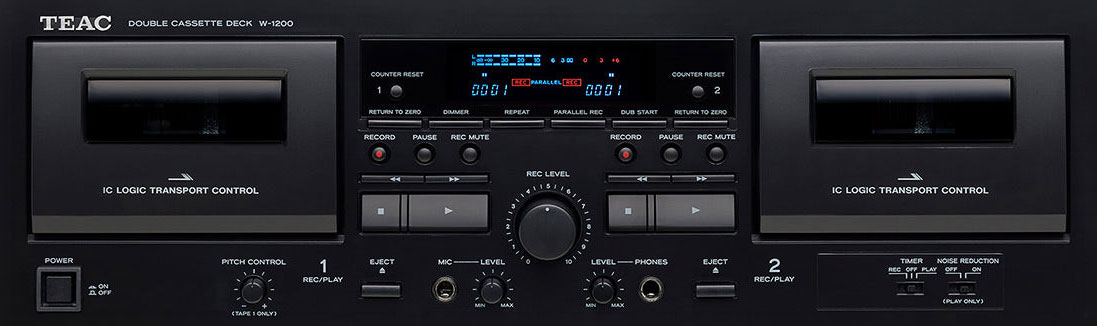
You found the part you wanted: maybe a drum break, maybe a bassline, maybe two bars where everything opened up. You pressed record on the blank tape and immediately hit pause. Then you played the source. When the right moment arrived, you released pause so the deck started recording. At the exact end of the part, you hit pause again. Then you reset the source and did the same thing again. And again. And again.
That was the grind. Take two seconds and make it four. Take four seconds and make it eight. Keep going until you had something long enough for somebody to rap over. If your timing was off, the beat stumbled. If your source was a copy of a copy, the hiss came with it. If the radio signal was bad, the distortion became part of the record whether you wanted it or not.
The quality was usually horrible in the technical sense. Mine might be a recording from the radio, dubbed to another cassette, then duplicated again for somebody else. But for the purpose we needed it for, it worked. It gave rappers something to write to. It let crews rehearse. It let me make beat tapes and pass them to friends, MCs, and whoever wanted to try something.
That is easy to romanticize now, because old technology looks cooler once you are no longer fighting with it. But at the time, the limitations were not aesthetic choices. They were the walls of the room. No waveform. No grid. No undo. No clean copy-paste. No "let me quantize that real quick." Just your ear, your finger, the physical clunk of the button, and the fear of messing up three minutes into a loop.
Pause tape production was not just a cheap way to loop music. It was a way to learn timing, editing, arrangement, patience, and taste with almost nothing.
What gets me now is how many people were doing this without knowing each other
For a long time, I thought of my pause-loop beats as something I did because I had no better option. I did not frame it as history. I was not sitting there thinking I was participating in some larger production language. I was a kid trying to make a beat out of whatever was in reach.
That is why learning more about pause tape production has been validating in a way I did not expect. I do not claim expertise. I am not writing this as the official historian of anything. I am writing it as someone who looked back and realized that a lot of my peers, and even some of my idols, had been standing in the same kind of room with the same kind of problem.
Gino Sorcinelli's 2019 Red Bull Music Academy feature makes the history feel bigger than one city or one scene. He traces pause tape production through early cassette culture, bedrooms, boomboxes, party records, demos, and official rap releases. The striking part is not only that people used the method. It is that people in places like New York, Orlando, Port Arthur, Ypsilanti, and beyond arrived at similar techniques without necessarily knowing each other existed.1
That is the part I keep coming back to. Hip-hop was young. Information did not move the way it moves now. There was no tutorial waiting for you. No producer breakdown on your phone. No Discord server full of people telling you which free plugin to download. But people still looked at the same consumer equipment and saw possibility. A cassette deck was supposed to record. A pause button was supposed to stop recording. Hip-hop heard both of those facts and asked, "What else can this do?"
The documented names matter. Chuck D used pause tapes in the early Public Enemy process, including the idea that became "Public Enemy No. 1." Red Bull's feature reports that the group later recreated the track in the studio but found the cleaner version missing some of the feel of Chuck's original cassette construction.1 De La Soul's early "Plug Tunin'" demo, Q-Tip's teenage work on A Tribe Called Quest ideas, and Easy Mo Bee's demo process all sit inside this larger cassette-to-sampler story.1
Q-Tip might be the cleanest bridge between bedroom pause loops and classic-record mythology. Sorcinelli's Micro-Chop piece on Nas' "One Love" points to DJ Premier's account of hearing a pause-mixed cassette version of the beat before the final record took shape.2 Premier has told versions of that story elsewhere too: Nas played him a cassette, Q-Tip had pause-mixed the idea, and the roughness of it pushed Premier to raise his own bar during the Illmatic sessions.34
That kind of story changes how you hear the method. Pause tapes were not only practice tapes. They were sketchpads. They were demos. They were proof-of-concept machines. They helped a producer discover whether a loop had life before the studio polished it, or before a sampler made it easier to repeat.
The flaws were not bugs. They were lessons.
One of the reasons pause tape production still feels important is that it taught you what a loop actually is. A loop is not just a repeated sound. A bad loop repeats and annoys you. A good loop repeats and starts revealing things. You hear the bassline differently on the eighth pass. The snare starts talking to the vocal stab. A horn hit becomes a hook because your ear keeps waiting for it to return. The loop either opens up or it dies right there in front of you.
When you made pause loops by hand, you learned that fast. There was nowhere to hide. If the downbeat came in late, everybody felt it. If the ending was sloppy, the next pass exposed you. If the source material did not have enough movement, the rapper ran out of energy. You learned song structure before you had language for song structure. You learned editing because every bad edit slapped you in the face. You learned patience because there was no shortcut around repetition.
I think that is why so many producers who came through pause tapes could adapt when better tools arrived. The sampler did not invent the ear. The drum machine did not invent the instinct. The machines made the process cleaner, faster, more flexible. They gave producers memory, timing control, truncation, pitch, sequencing, and a way to stack ideas without destroying the generation before it. But the thought process was already there.
K-Def, in the Red Bull piece, connects pause buttons to later skills like editing, time-stretching, pitch-shifting, and sample truncation.1 That makes complete sense to me. Once you have spent hours trying to catch a sample cleanly with a pause button, you understand why the start and end points matter. You understand why a sloppy tail can ruin a groove. You understand why a loop has to breathe.
My own pause-loop period eventually led to working with friends and crews, most notably my first partner, MC Core, and then my first crew, Camp Zero. Once I got my hands on actual equipment, I left pause-loop beats behind pretty quickly. Of course I did. Anybody who has spent that much time fighting a cassette deck understands the joy of a tool that can actually remember what you told it to do.
But leaving it behind did not erase it. That process was the doorway. It taught me how to listen for the part inside the song that wanted to become something else.
One of the random beat tapes I made back in the day, all made by breaking and rewiring my mother's hi-fi system and nearly burning our apartment down from exposed wiring.
The spirit moved into samplers, DAWs, phones, and free tools
It would be easy to call pause tape production a lost art and leave it there, like a museum piece sitting behind glass. I understand that impulse. The physical act is mostly gone. Most new producers are not hunched over a cassette deck trying to land the 37th repeat without ruining the whole tape. They have free apps, browser tools, phone recorders, DAWs, sample packs, stem splitters, time-stretching, pitch correction, and more power than a professional studio used to offer. That is also why modern explanations of the method, including Loop Kitchen's video essay on the pause button as a hip-hop entry point, feel less like nostalgia than translation.6
But the spirit of pause tape production is not gone. It lives anywhere somebody hears a small piece of sound and decides it can be bigger. It lives in the kid looping audio on a phone. It lives in the producer using a free DAW on a cheap laptop. It lives in the beatmaker chopping one bar because that is the part with the feeling in it. The tools are almost unrecognizable now, but the instinct is familiar.
Nas and DJ Premier even made that connection explicit with "Pause Tapes" from their 2025 album Light-Years.5 The song works because it treats the technique not as trivia, but as origin story. Nas remembers early beatmaking through the language of cassette players, radio, records, and repetition. I am avoiding quoting the lyrics at length because lyrics deserve that respect, but the point is clear: the memory of record-loop-repeat still matters to people whose names are carved into the culture.
That is what I wanted to bring light to. Pause tape production deserves to be remembered because it explains something essential about hip-hop. Early producers did not always have money. They did not always have formal training. Some did not even have a clear idea of what "music production" was supposed to entail. But the need to create was there anyway. So they found a way.
I recognize myself in that. Not because I was famous. Not because my pause tapes changed the world. They did not. I recognize myself because the gesture was the same: take what you have, push it past its intended purpose, and make something useful enough for the next person to rhyme over.
That is a small kind of validation, but it means something. Years later, reading about Q-Tip, Chuck D, Easy Mo Bee, De La Soul, 14KT, and others using pause tapes does not make me feel like I was secretly part of their story. It makes me feel like I was part of the same language. A language passed through cheap stereos, blank cassettes, neighborhood radio, borrowed records, bad copies, and the belief that if the loop hit right, everything else could start from there.
The pause button was not designed to build hip-hop. That is exactly why the story matters.
Pause-loop beats were the beginning of my production journey, not the end. You can hear where that path eventually led in my current music production library at biglavstodd.bandcamp.com.
- Gino Sorcinelli, "Press Pause: The History of Pause Tape Production," Red Bull Music Academy Daily, April 24, 2019.
- Gino Sorcinelli, "Nas' 'One Love' is a Pause-Tape Beat," Micro-Chop, August 23, 2016.
- Mark Ronson and DJ Premier, "DJ Premier on Gang Starr, '80s synth pop, and Biggie's comedic side," The FADER, November 1, 2021.
- "An Oral History of Nas' Classic Debut Album 'Illmatic,'" XXL, April 18, 2014.
- "Pause Tapes" by Nas & DJ Premier, Apple Music listing for Light-Years, released December 12, 2025.
- Loop Kitchen, "How The Pause Button Became Hip-Hop's Secret Weapon," YouTube.